EUROCENTRIC

05 · 509 BC–AD 212

Rome Gathers Europe

Rome made conquest durable by extending citizenship, local office and military service outwards from one city until much of Europe lived inside a common political order.

Enter the forged road

Act I · The city under law · 509–338 BC

Power Without a King

Rome divides command among magistrates, Senate and assemblies, then makes conflict inside the citizen body part of the constitution.

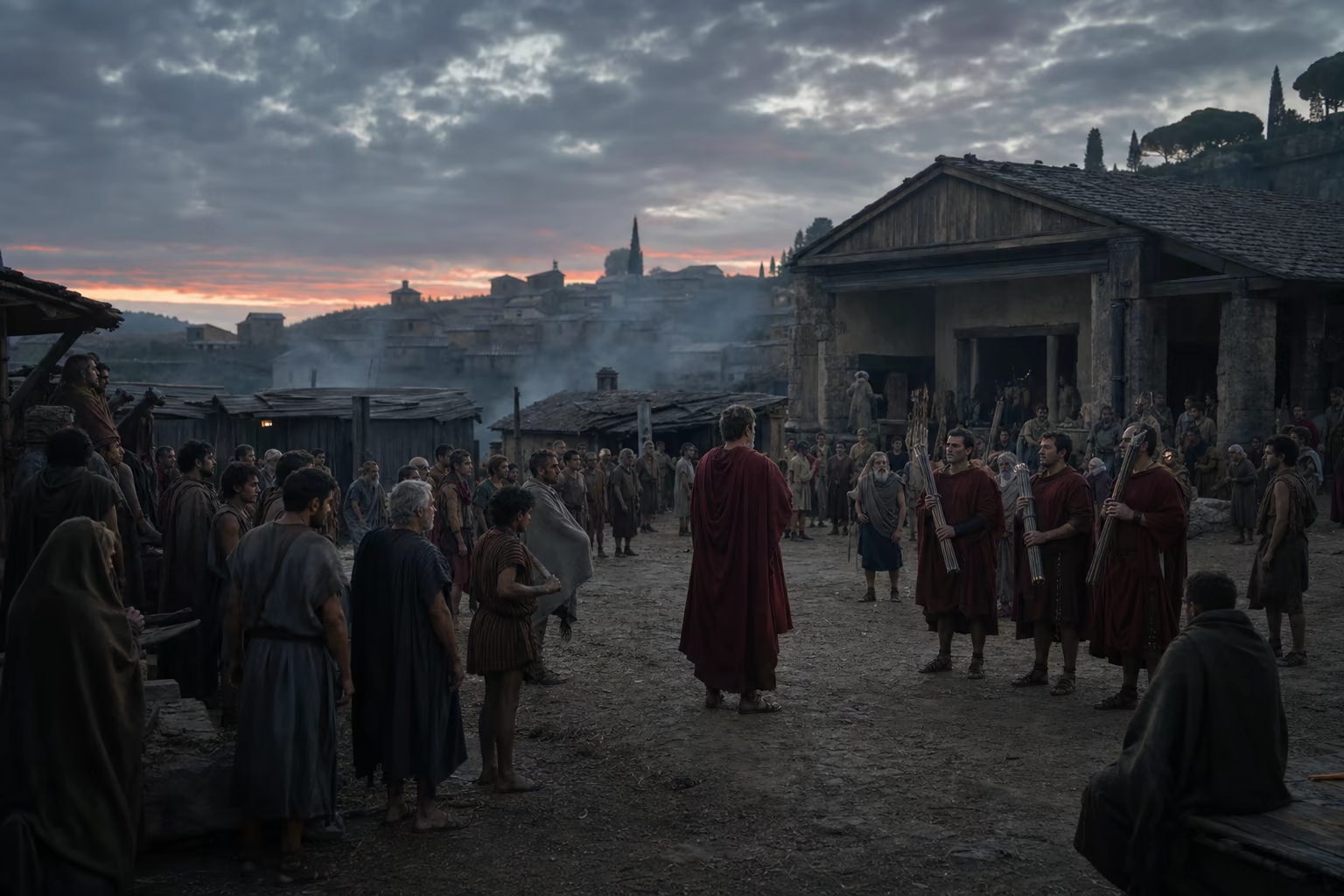
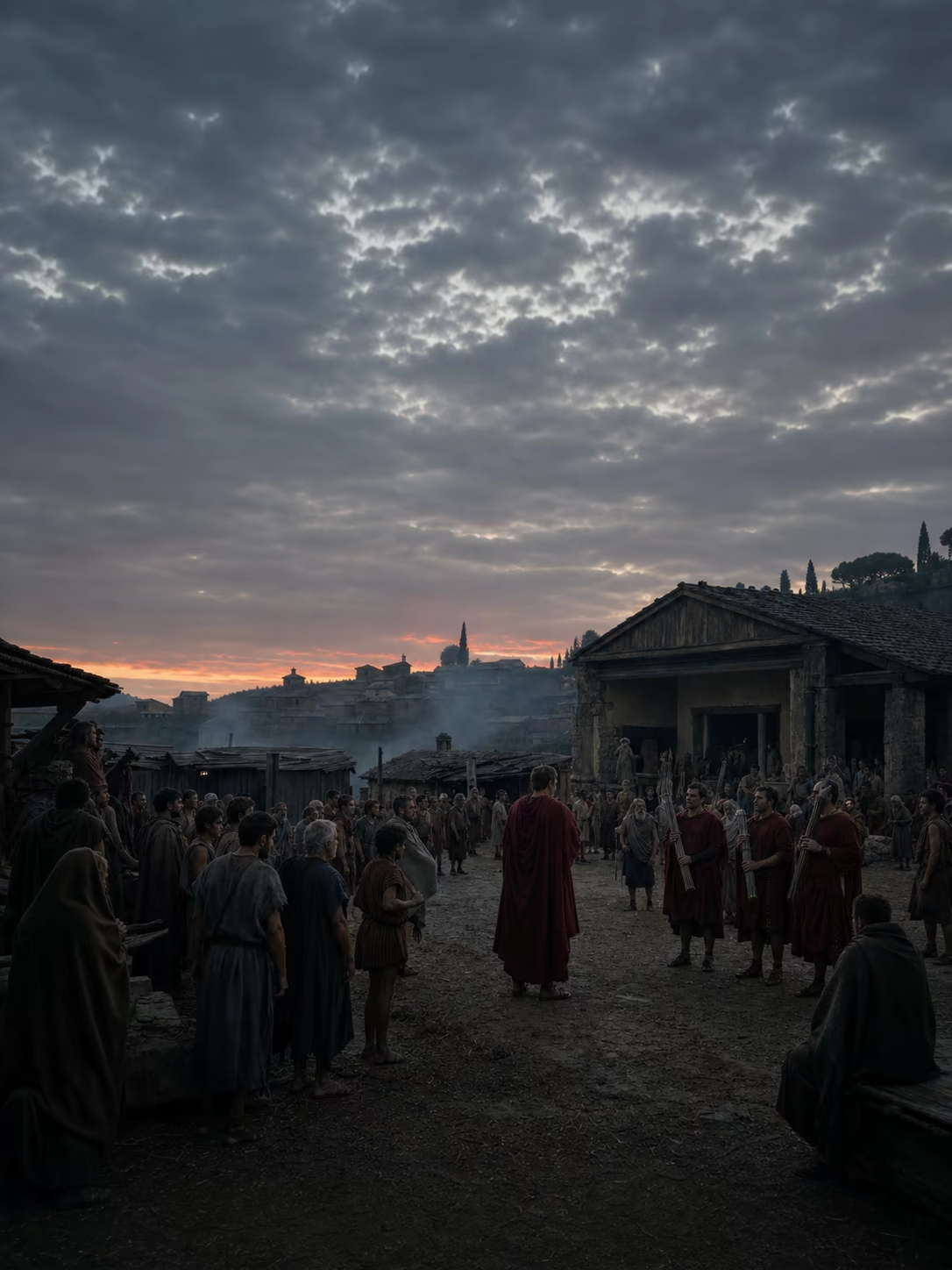
A worn early Roman Forum at dawn as lictors carry rods before an elected magistrate and citizens gather around timber and stone public buildings.Place, date and surviving record

traditionally 509–c. 450 BCThe Forum · the Capitoline · the Tiber crossing

The King Leaves. Command Remains.

Rome answered the fear of kingship by dividing public power without making that power weak.

At dawn, attendants cross the Forum carrying bundles of rods before an elected magistrate. The rods announce coercive authority; outside the sacred boundary of the city, an axe can be added to them. Roman memory placed the expulsion of the last king in 509 BC and made hatred of kingship the Republic’s first principle. The exact transition is hidden by centuries of later storytelling, but the political order that emerged treated command as necessary, dangerous and temporary.

Two consuls eventually stood at the summit of the annual magistracies. Each possessed imperium, the authority to summon troops, lead armies and execute public decisions, and each had a colleague capable of obstruction. Praetors developed judicial and military functions. Censors registered citizens and property, revised the Senate and let contracts for public work. The offices accumulated over time; the familiar constitution of the middle Republic cannot be placed fully formed in its first year.

The Senate supplied memory across those short terms. Its members were current and former magistrates drawn from the leading families. Formally it advised. In practice its control of finance, foreign relations, religious consultation and the allocation of commands gave its decisions enormous weight. Popular assemblies elected magistrates, enacted laws and judged some capital cases, although citizens voted in groups whose order and composition favoured wealth, age and established organisation.

Roman liberty therefore meant that no citizen should obey a king, not that each citizen held equal power. Elite households competed for office and military honour before a voting people. Magistrates needed authorisation, auspices, colleagues and money; senators needed men willing to vote and serve; assemblies needed an officeholder to summon them and place a proposal before them. The Republic created action from this managed dependence, then carried the same magistrates from civic space into war.

What survived
  • The conventional date of 509 BC belongs to Roman historical memory; archaeology and later literary reconstruction show a longer transformation from monarchy to republican government.
  • Magistracies, assemblies, senatorial procedure, religious rules and symbols such as the fasces document a constitution built from divided but effective authority.

Fred K. Drogula (2026)Andrew Lintott (1999)Livy (late first century BC–early first century AD)Polybius (second century BC)

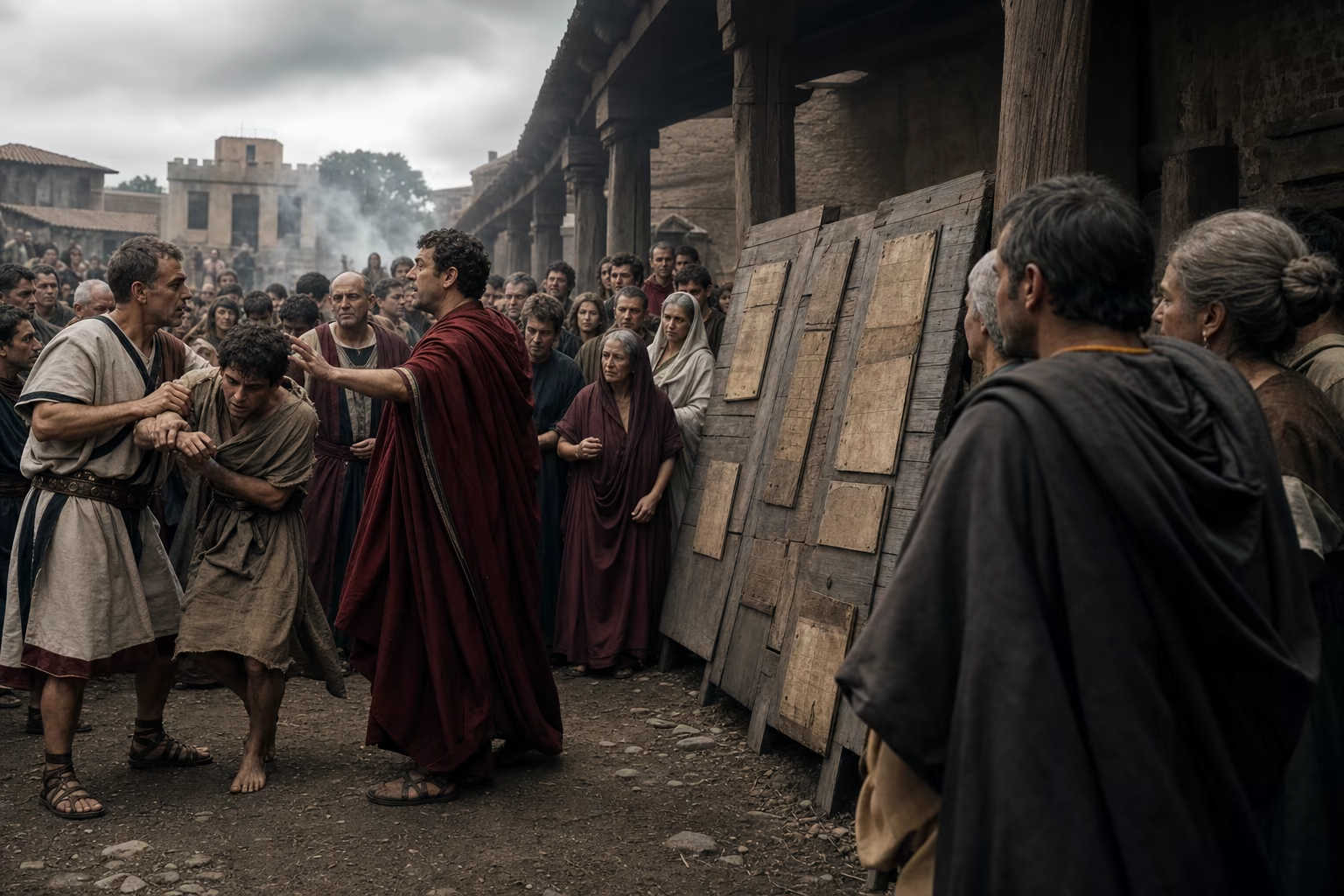
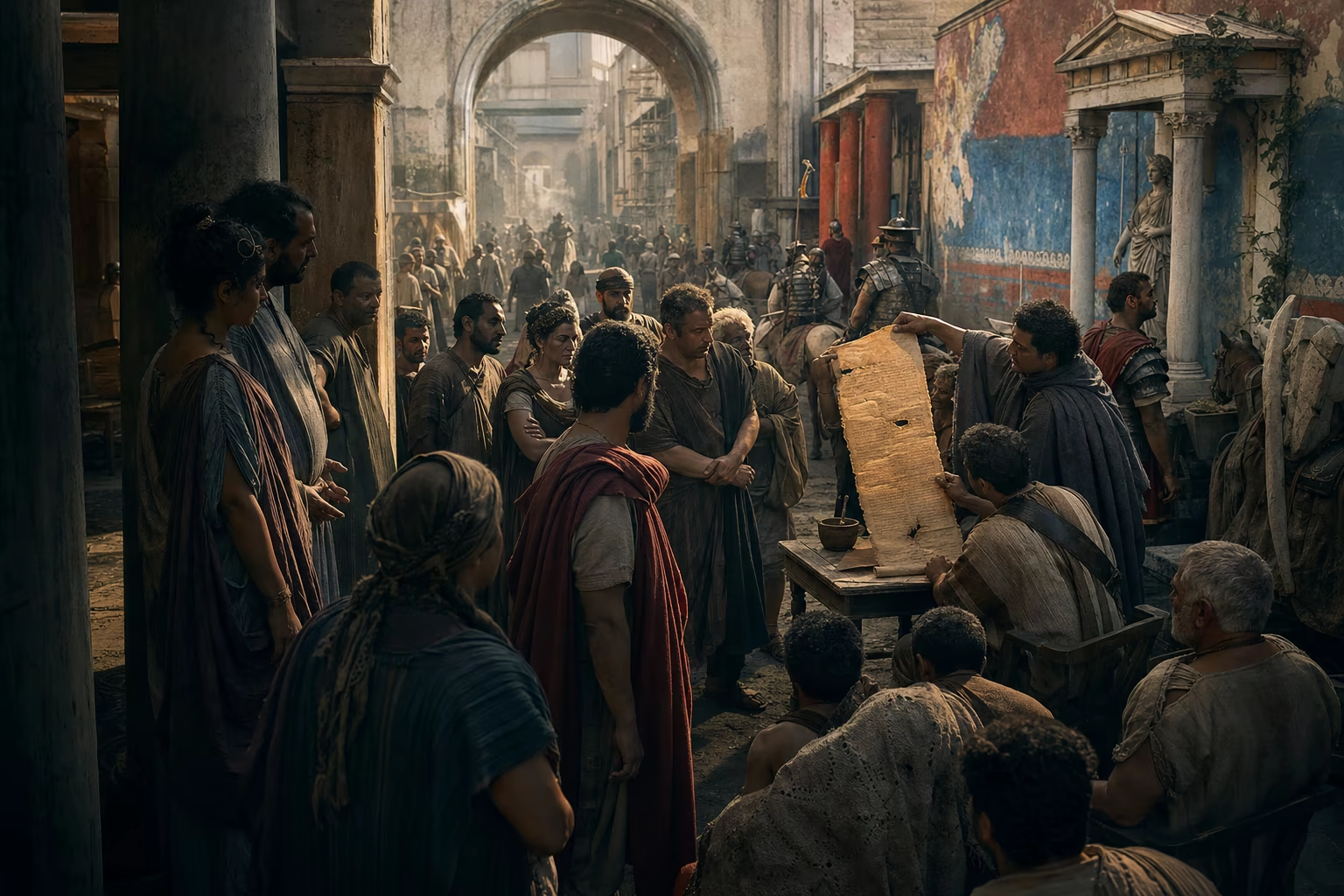
Citizens crowd around a public display of early Roman law while a tribune intervenes between a magistrate and a seized debtor.Place, date and surviving record

fifth–fourth centuries BCThe Forum · the Aventine · the assembly grounds

The People Make Power Answer

Conflict between citizens forced command to acquire written limits, elected opponents and public procedures.

A debtor is seized by a creditor and led through the same public ground where magistrates promise to defend the community. Rome’s citizen body contained sharp divisions of wealth, lineage and legal capacity. The later narrative called the struggle between patricians and plebeians a conflict of the orders. Its episodes were polished by family memory, but the institutions it produced are unmistakable: tribunes of the plebs, a plebeian council, access to magistracies and a body of public law claimed by the whole citizen community.

The tribunes carried personal inviolability and the power to intervene on behalf of a citizen. They could stop official action, summon the plebeian council and bring elite conduct before a public audience. Their office did not abolish hierarchy. It created an authorised point from which hierarchy could be challenged inside the state. Plebeian families then entered the highest magistracies and joined patricians in a new office-holding nobility.

Roman tradition dated the Twelve Tables to 451 and 450 BC after a special commission displayed rules in the Forum. The tablets themselves are lost; later authors quote and paraphrase fragments concerning debt, inheritance, family authority, injury and procedure. The surviving language is neither a modern code nor proof of equal justice. Its political force lay in the claim that legal words could stand outside the private knowledge of magistrates and priests.

The resulting constitution rested on several kinds of public action at once. Citizens elected and legislated; magistrates proposed and executed; the Senate coordinated money, diplomacy and long policy. Religious specialists judged signs and lawful timing. Tribunes could interrupt. Each element acquired leverage by preventing another from acting alone. This was a competitive order built for a face-to-face city, and its capacity to turn civic rank into military obligation would soon make the city much larger than its institutions expected.

What survived
  • Later quotations preserve fragments attributed to the Twelve Tables, while the political narrative of their publication comes through authors writing centuries afterward.
  • Tribunician powers, plebeian legislation and the eventual opening of senior offices document durable institutional results of conflict within the citizen body.

Fred K. Drogula (2026)Andrew Lintott (1999)Roman legal tradition (traditionally 451–450 BC)Livy (late first century BC–early first century AD)

Hold the Republic in balance

Three views explain what the people, magistrates and Senate could do, what restrained each institution and what their dependence produced.

AuthorityElection · legislation · public judgment

LimitUnequal voting units; a magistrate convenes and proposes

ResultElite competition must pass through a citizen vote

Assemblies elected magistrates, enacted laws and decided some trials, but citizens voted through unequal groups and only on business placed before them.

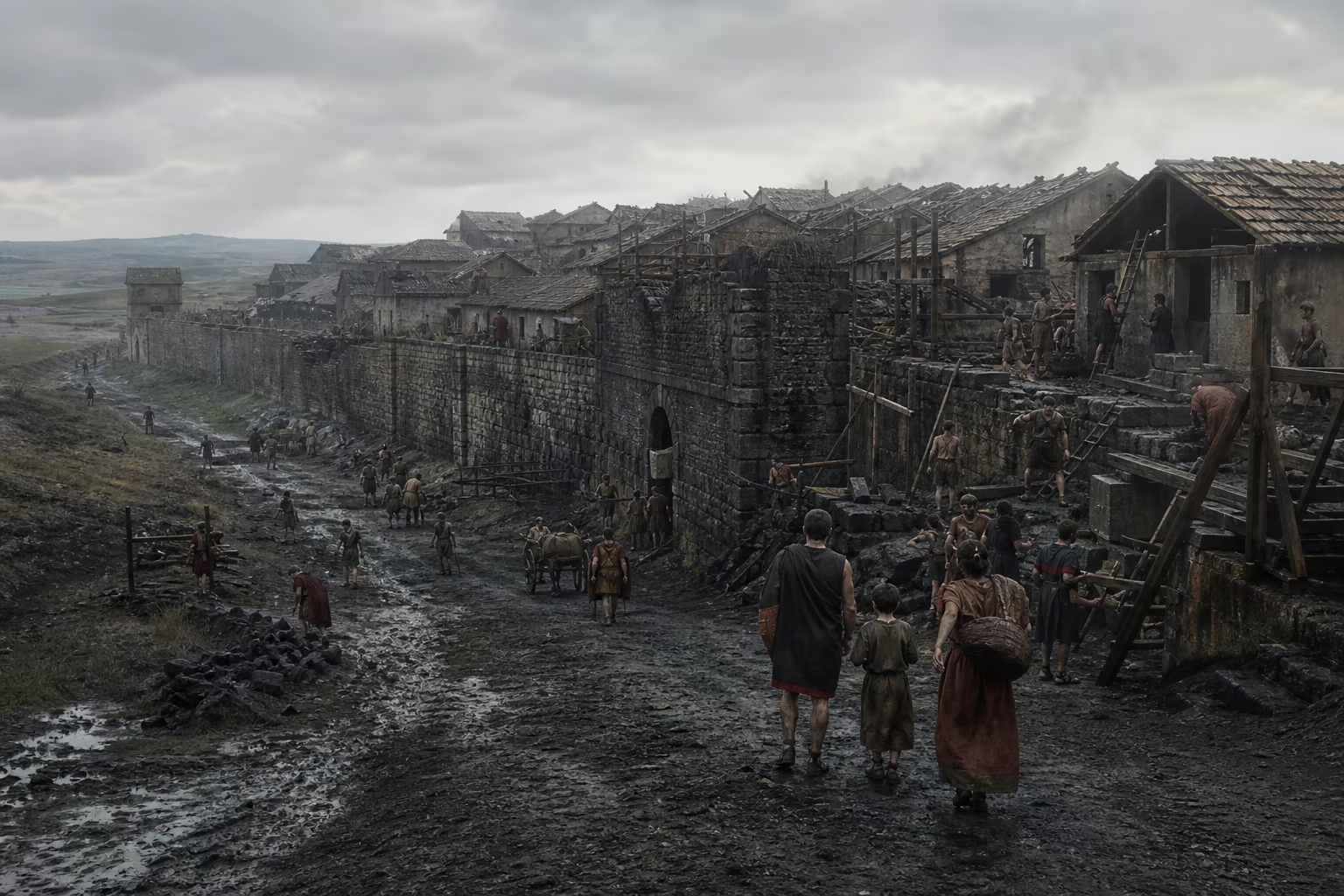
Roman families and soldiers rebuild beside a scorched city wall after the Gallic sack while new levies assemble beyond the gate.Place, date and surviving record

c. 390–338 BCRome · Latium · the central Apennines

Defeat Teaches Rome to Return

Rome’s strength lay in restoring armies and political relationships after reverses that would end another city’s war.

A household returns to blackened ground after a Gallic force has occupied and ransomed Rome. The date and details of the sack, conventionally placed in 390 BC, are entangled with later moral stories. The defeat itself remained central to Roman memory because the city survived it. Walls were strengthened, armies went out again and neighbouring communities discovered that one successful invasion had not removed Rome from Latium.

Republican warfare drew on citizens registered by household and property. The census connected a man’s civic position to military liability and voting rank. Service demanded harvest time, equipment, bodily risk and years away from land. Success rewarded commanders and could distribute booty, but repeated campaigning also pressed smallholders and debtors. The system joined political standing to an expectation that citizens would fight under elected magistrates.

Rome also learned through settlements rather than battlefield annihilation. Some defeated communities lost land. Some received forms of citizenship. Some remained allies bound by treaty and military obligation. Colonies placed organised groups at strategic sites without creating a continuous Roman territory. These arrangements were neither uniform nor designed in one moment; they accumulated through negotiation, coercion, local circumstance and renewed revolt.

The settlement after the Latin War in 338 BC became a decisive enlargement. Rome dissolved the old Latin League and dealt with communities separately. Direct collective action against Rome became harder, while each community acquired its own bundle of rights and duties. The city had begun to solve a problem that Greek hegemonies repeatedly faced: how to preserve local civic structures while preventing allied autonomy from becoming a rival coalition.

What survived
  • Archaeology does not confirm the full destruction described by later literary narratives, but the Gallic sack became an organising memory of Roman vulnerability and recovery.
  • Colonies, treaty communities and differentiated citizenship are visible in settlement histories, legal categories and military obligations after Rome’s fourth-century wars.

Livy (late first century BC–early first century AD)Fred K. Drogula (2026)Marian Helm (2017)Andrew Lintott (1999)

Rebuild the power to return

Three stops show how registration, negotiated obligation and separate settlements let Rome raise forces again and prevent a rival Latin coalition.

MechanismHouseholds and property are assigned to civic and military classes

ConsequenceA defeated city can summon another citizen levy

The census connected household, property, civic rank and military liability, making renewed recruitment a public procedure rather than a commander’s private following.

Act II · Roads and allies · 338–146 BC

The Road Makes an Army

Different settlements, colonies and military obligations turn defeated Italian communities into the manpower system of Mediterranean conquest.

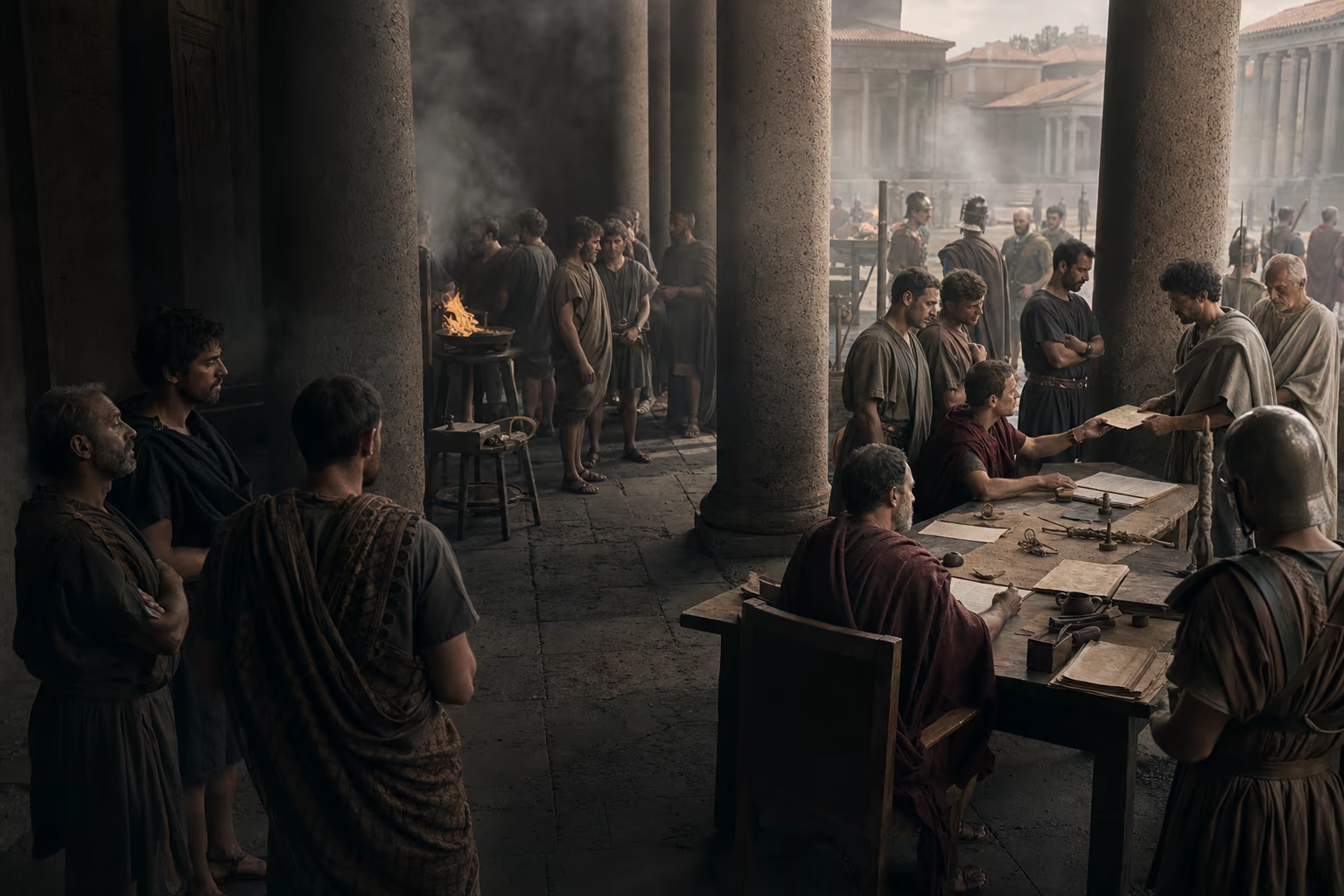
Italian envoys place separate treaty tablets before Roman magistrates while colonists, allied soldiers and local councillors wait under a smoky portico.Place, date and surviving record

338–c. 275 BCLatium · Campania · Samnium · southern Italy

Defeat Has Many Terms

Rome enlarged its power by imposing different relationships on different communities instead of erasing every conquered city.

Envoys arrive in Rome carrying separate requests from cities that had fought on the same side. One community keeps its magistrates and territory as an allied state. Another receives citizenship without a practical vote at Rome. A Latin colony gains rights of commerce and movement defined by its status. A third loses land on which Roman or Latin settlers will stand guard. The variety prevents a single defeated bloc from re-forming.

Roman citizenship itself contained political, civil and military dimensions. Voting and eligibility for office mattered at the centre. Marriage recognised by Roman law, property transactions, inheritance and access to courts shaped family and economic life. Partial grants could separate these benefits. Latin status provided another adaptable legal relationship. Treaties with allied communities preserved formal local independence while requiring troops and accepting Roman leadership in war.

The system imposed heavy burdens. Allied contingents often matched or exceeded Roman troops in republican armies, while decisions about war remained at Rome. Colonies occupied confiscated land and controlled routes. Communities that resisted could face renewed campaigns, hostage-taking, property loss and enslavement. Incorporation worked because it created usable positions below full equality, not because conquered peoples had freely chosen Roman command.

It also left room for ambition. Local elites kept councils, cults and property, dealt with Roman commanders and could seek better status for themselves or their communities. Individuals moved for trade, marriage and service across legal boundaries that required new courts and instruments. By the early third century BC, Rome commanded a peninsula filled with cities that remained locally recognisable while supplying a common war effort.

What survived
  • Community histories and later legal discussions preserve a dense landscape of citizens, citizens without voting power, Latins and treaty allies rather than one standard settlement.
  • Republican levy figures and campaign narratives repeatedly distinguish Roman and allied contingents serving under Roman strategic leadership.

Marian Helm (2017)Saskia T. Roselaar (2016)Andrew Lintott (1999)Livy (late first century BC–early first century AD)

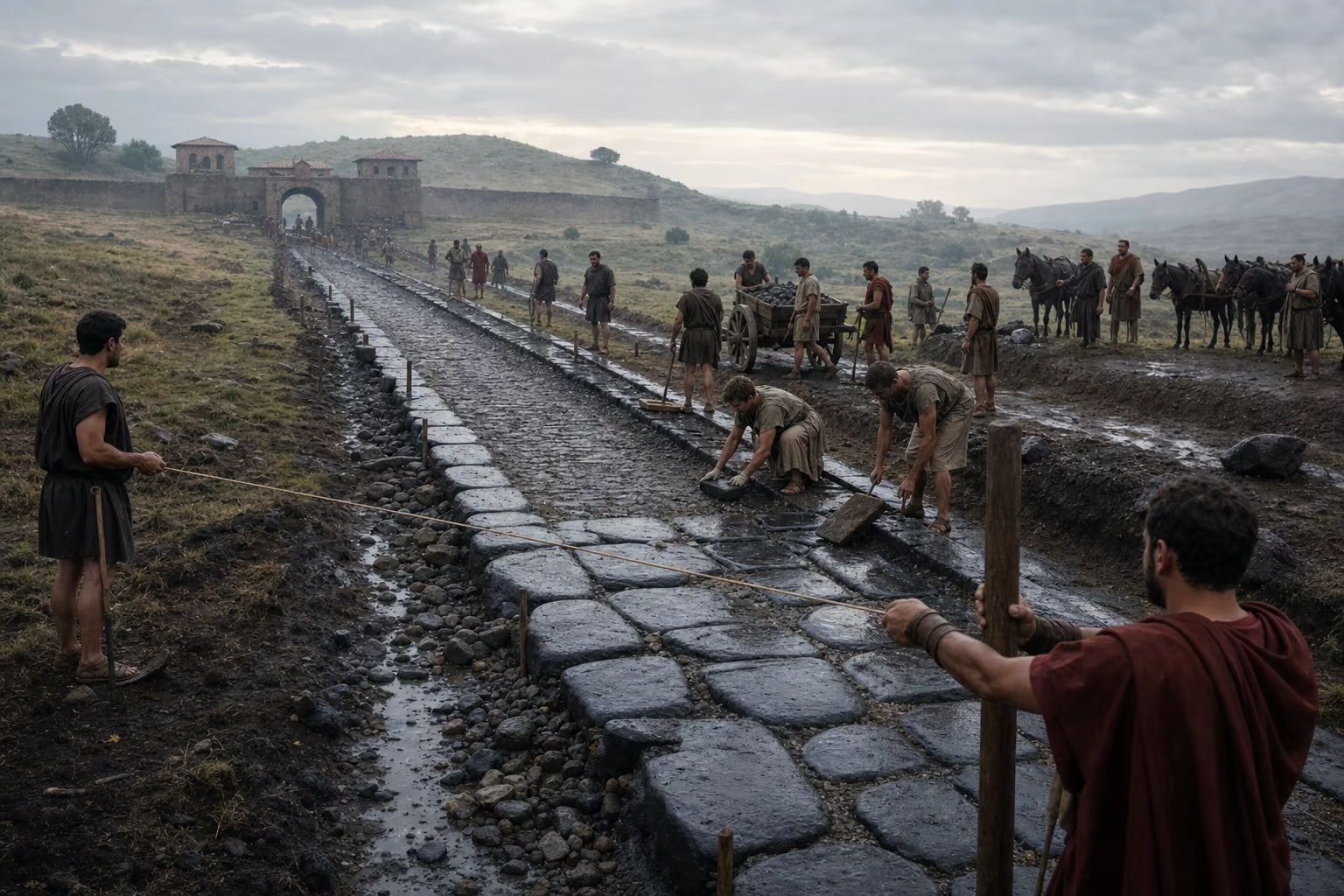
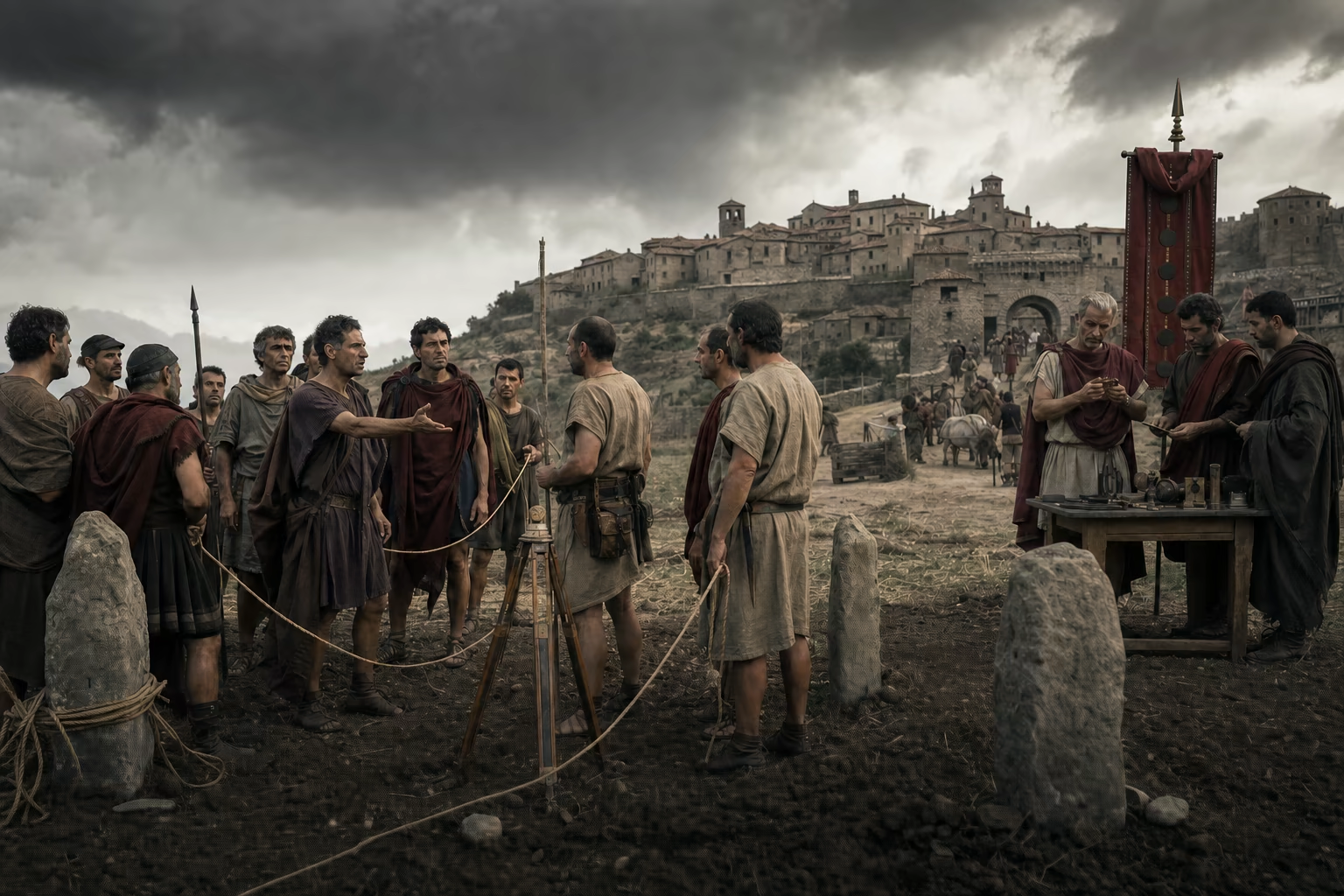
Roman surveyors, road builders and allied recruits occupy a long basalt road under construction between a colony gate and the hills of Campania.Place, date and surviving record

312–264 BCThe Via Appia · Campania · the Adriatic approaches

The Road Makes an Army

Roads and colonies turned separate obligations into forces that Rome could assemble, supply and replace.

A surveyor sights along a taut line while labourers set large basalt blocks into prepared layers. The Via Appia began in 312 BC under the censor Appius Claudius Caecus, running from Rome toward Capua before later extensions reached southern Italy. It did not appear as a finished imperial highway. Drainage, bridges, cuttings, paving and milestones accumulated as Roman movement required a durable route through contested land.

The road served armies before it became a familiar symbol of travel. Messengers carried orders; recruits reached mustering points; pack animals and carts moved equipment; officials could return to Rome. Sea and river transport remained essential for bulk goods, and many local roads were older than Roman rule. Roman power came from joining those routes to colonies, treaty obligations and a calendar of repeated levies.

Colonies held crossings, coasts and corridors. Their settlers received land and a corporate civic life while anchoring Roman or Latin power among neighbouring communities. Roads made those positions mutually supporting. A hostile army could win a field and find another fortified community ahead, another allied contingent behind and another Roman levy forming along the route to the capital.

The network was political before it was geometric. Each line led to communities with distinct rights, resentments and reasons to comply. Rome demanded manpower and interfered with land; it also offered allies a share in campaigns whose victories could bring booty and regional advantage. By the First Punic War, this Italian engine allowed a city with limited naval experience to lose fleets, build replacements and continue fighting across the sea.

What survived
  • Milestones, road surfaces, bridges and settlement patterns document routes built and extended in stages rather than a single centrally planned network.
  • Colonial locations and literary campaign accounts show how roads linked strategic settlements, levies and military supply across Italy.

Ray Laurence (1999)Marian Helm (2017)Guy Bradley (2020)Livy (late first century BC–early first century AD)

Build the Italian engine

Four map states show separate settlements, the Via Appia, a peninsula of colonies and allies, and the mobilisation system tested by Hannibal.

One war ends in several legal relationships
  • RomeThe Senate and people direct war and settlement.
  • CapuaA powerful Campanian city receives a form of Roman citizenship without an effective vote at Rome.
  • AntiumLand and ships pass under Roman control after Latin resistance.
  • TiburA treaty preserves a distinct allied community under Roman leadership.

Rome broke the defeated Latin coalition into distinct settlements whose rights and military duties were negotiated community by community.

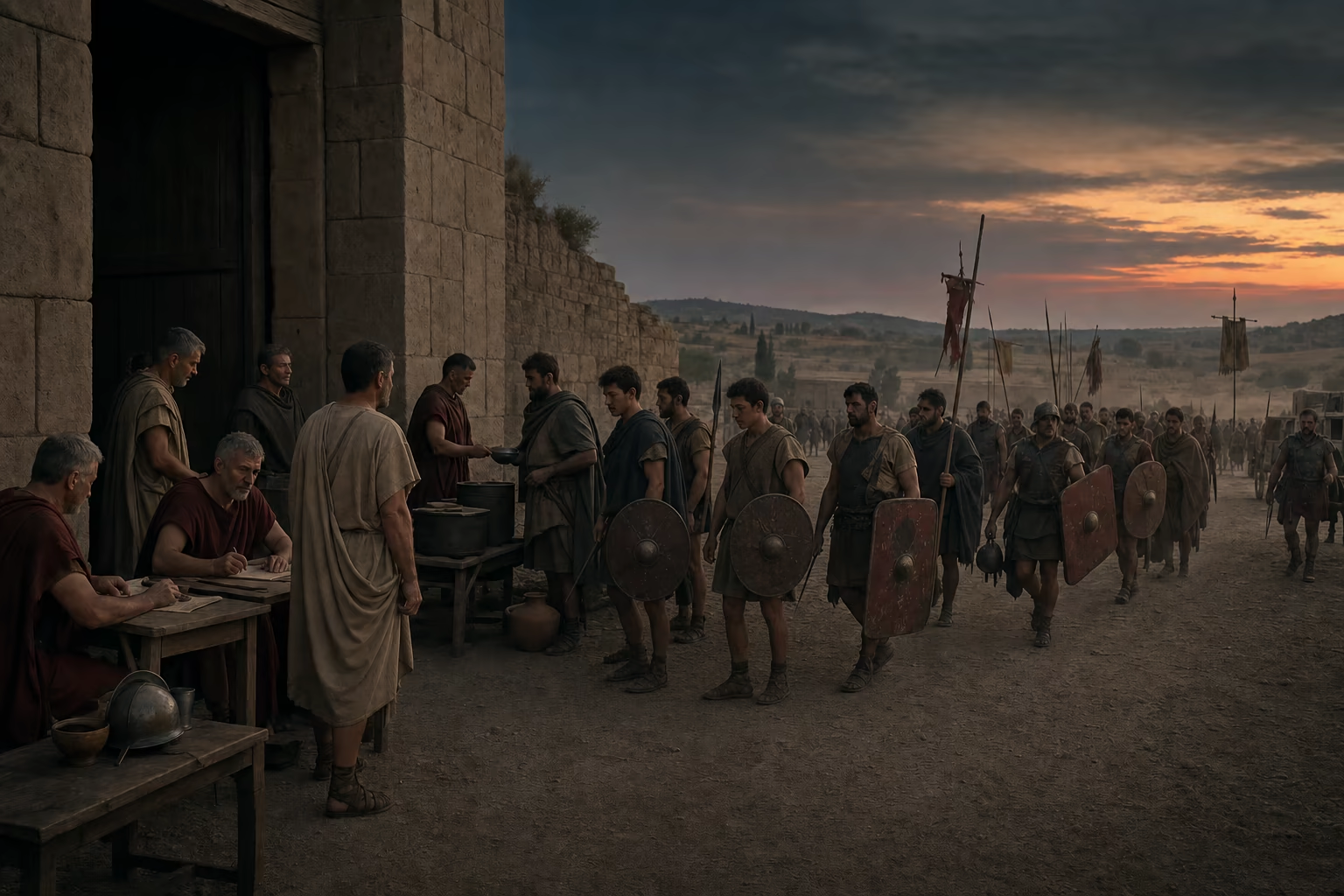
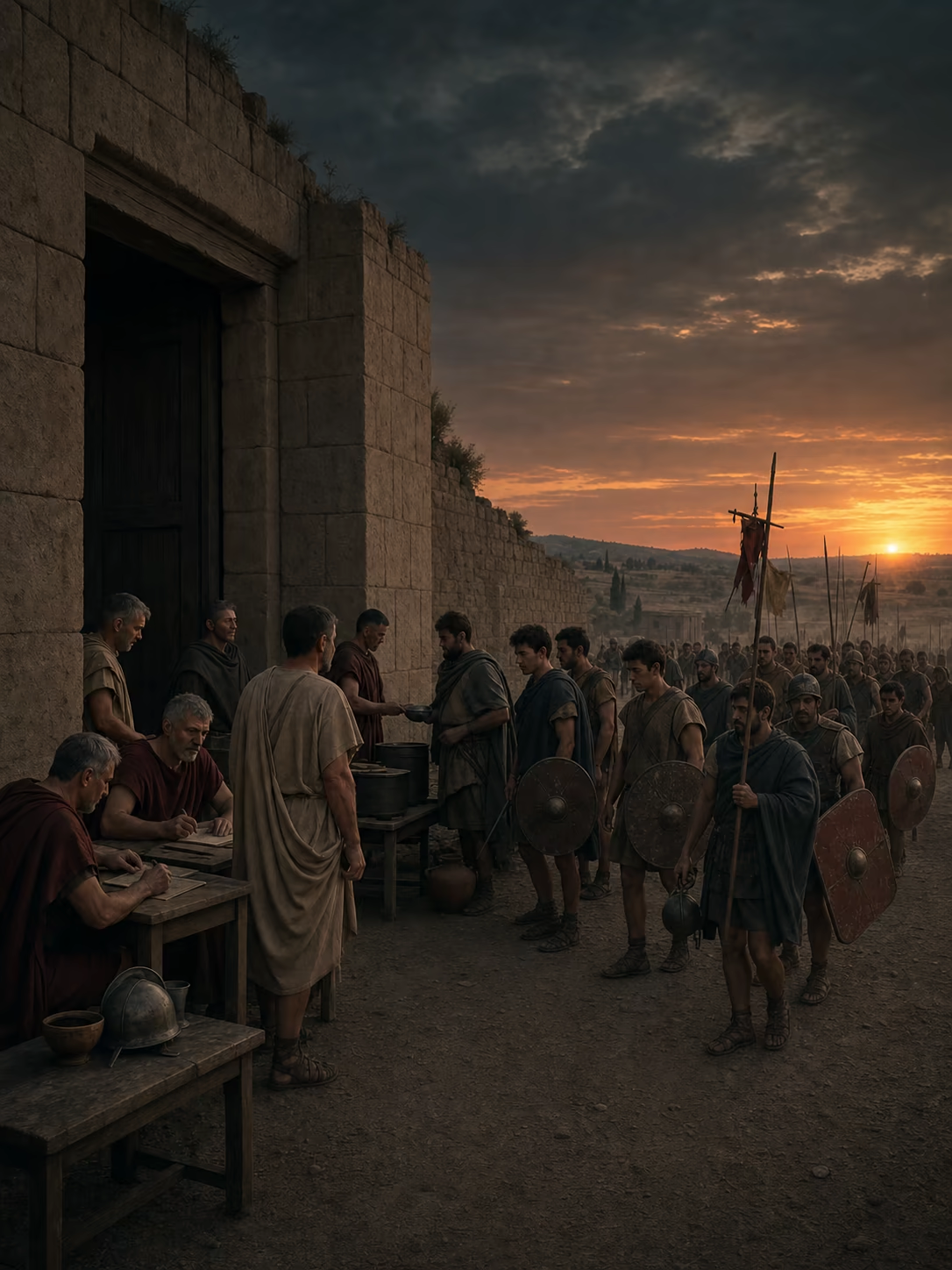
Exhausted Roman and allied survivors reach the gates of Canusium after Cannae while officials organise another levy without heroic battle poses.Place, date and surviving record

218–201 BCThe Alps · Cannae · Capua · North Africa

Hannibal Wins the Battles. Rome Keeps the War.

The Second Punic War revealed that Rome’s decisive weapon was the political capacity to replace armies and retain enough Italian partners.

Hannibal crosses the Alps with a Carthaginian army drawn from several regions, wins at the Trebia and Lake Trasimene, then destroys a much larger Roman force at Cannae in 216 BC. Tens of thousands are killed or captured. Consuls, former consuls, senators, allied officers and ordinary soldiers disappear in a day. Several southern Italian communities defect; Capua, one of the peninsula’s greatest cities, opens its gates to Hannibal.

Rome refuses a negotiated settlement. The Senate fills offices, ransoms no prisoners under the traditional account and orders new recruitment that reaches younger men, older men, the poor and enslaved volunteers promised freedom. Armies avoid another Cannae while attacking Hannibal’s allies, protecting loyal communities and contesting supply. The strategy is costly and inconsistent, but it keeps several theatres active at once.

Italian loyalty is not automatic. Communities calculate danger, grievance and opportunity. Some Samnite, Lucanian, Bruttian and Greek cities join Carthage; Latin colonies resist demands for further troops; other allies hold to Rome under severe pressure. Hannibal can punish resistance and reward defection, yet he cannot dissolve the entire network or receive enough sustained reinforcement to turn battlefield mastery into a new Italian settlement.

Roman forces then carry the war outward. Campaigns in Spain cut Carthaginian resources. Syracuse falls. Capua is recovered and punished. Publius Cornelius Scipio invades North Africa, compelling Hannibal to leave Italy, and wins at Zama in 202 BC with crucial Numidian support. Rome’s victory belongs to no timeless superiority of legion over phalanx or genius over commerce. A coercive alliance system survived its hardest test and gave the Republic the manpower to learn across defeat.

What survived
  • Polybius provides the closest extended narrative and an analysis of Roman institutions; Livy preserves additional Roman traditions from a later Augustan setting.
  • Defections, loyal communities, repeated levies, colony protests and simultaneous campaigns show an alliance system under negotiation and coercion rather than automatic Italian unity.

Polybius (second century BC)Livy (late first century BC–early first century AD)Guy Bradley (2020)Marian Helm (2017)

See why Cannae did not end the war

Three stops move from the destroyed army at Cannae through the contested Italian alliance network to Rome’s outward counterwar.

MechanismVacant offices are filled and recruitment opens again

ConsequenceThe loss of an army does not dissolve the state directing the war

Cannae destroyed a Roman army and killed much of its command class, but the Senate, magistracies and recruitment procedures remained in operation.

Act III · The returning command · 146–27 BC

The Conquered World Returns Home

Land, enslaved labour and overseas armies enlarge the prize of office until public commands become weapons in Roman civil war.

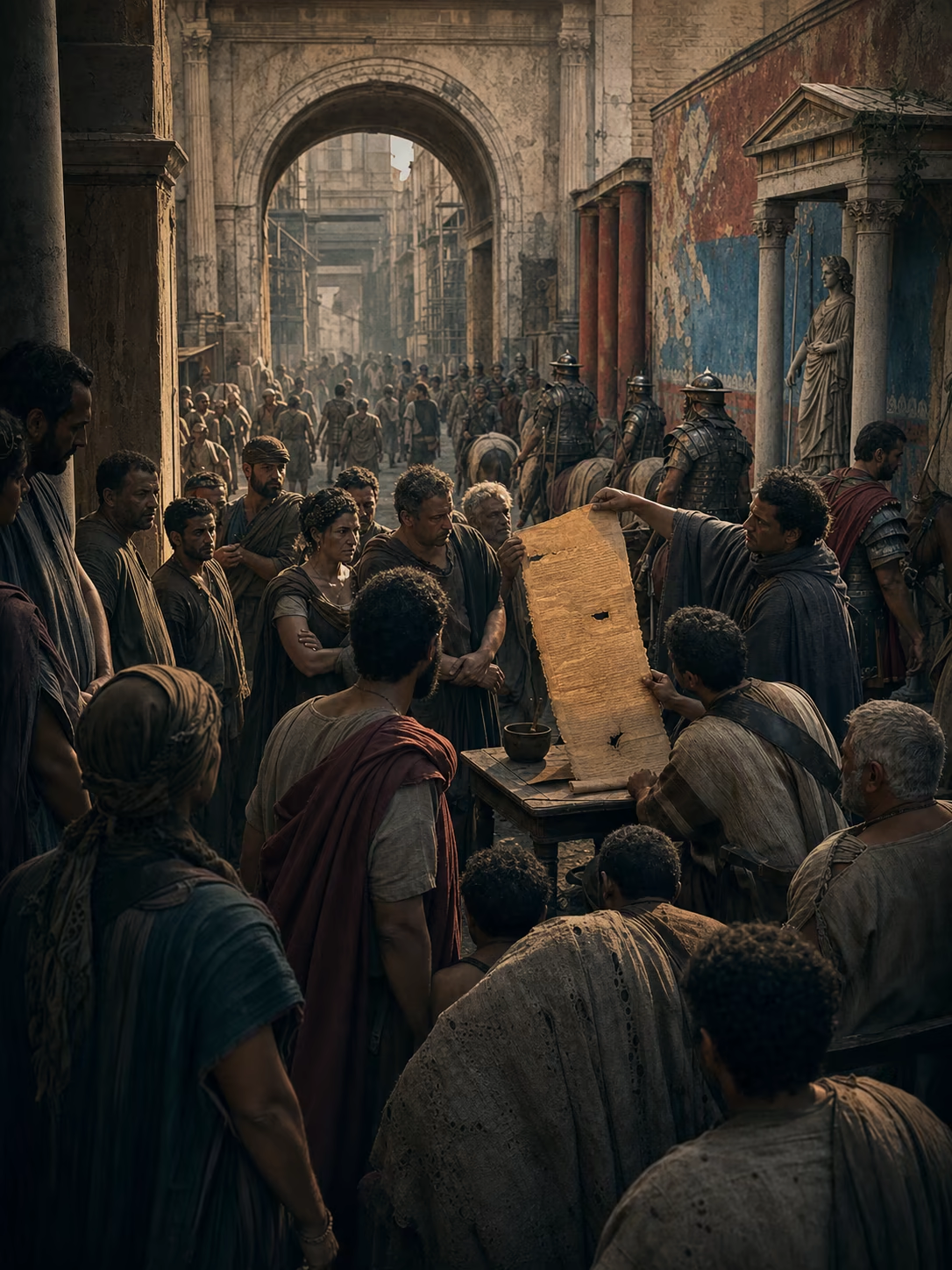
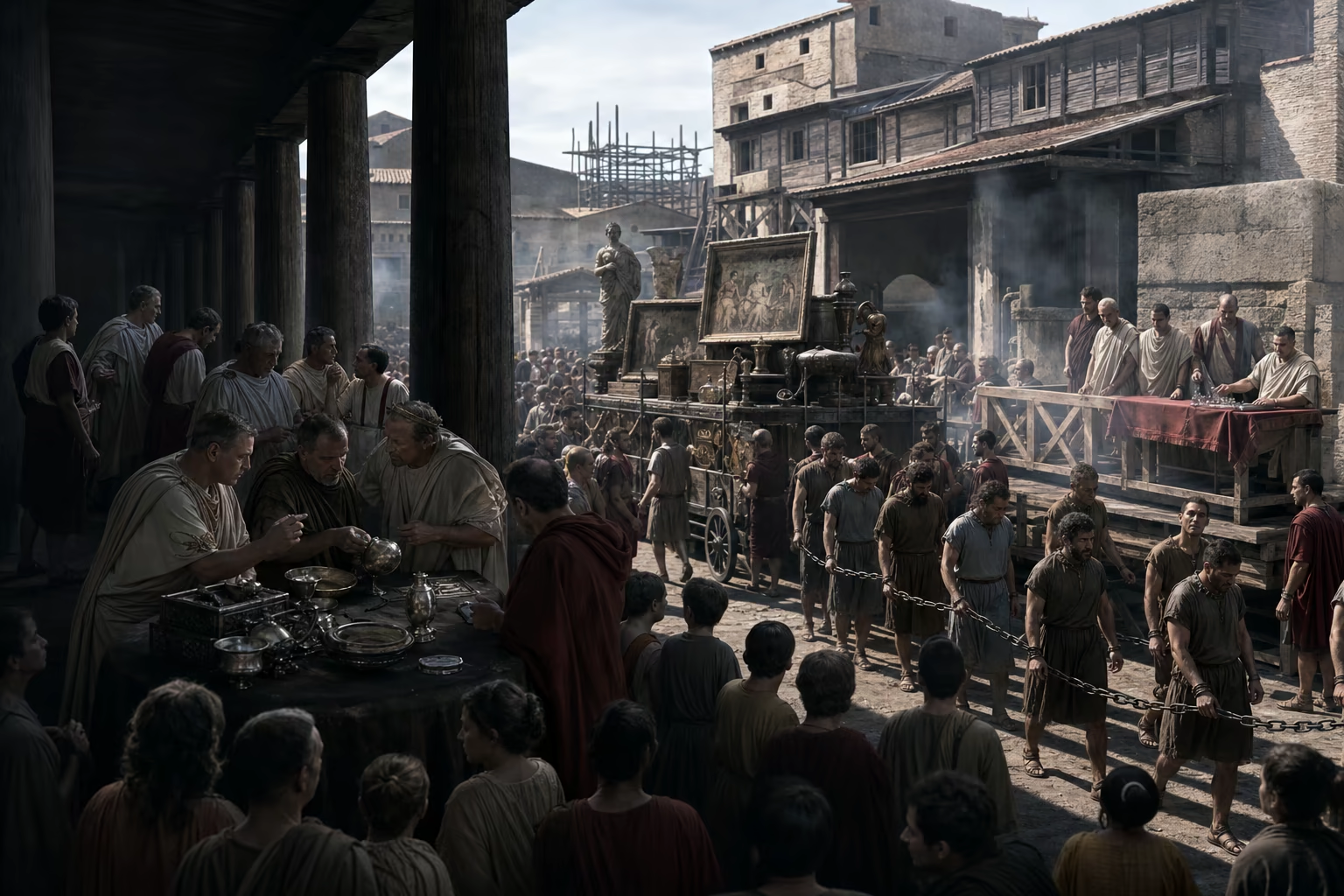
A Roman triumph brings captured objects and prisoners into a crowded, smoky city as auctioneers and senators turn conquest into property and political credit.Place, date and surviving record

200–133 BCRome · Carthage · Corinth · the new provinces

Victory Enters the City

Mediterranean conquest brought wealth, captives and long commands into institutions designed for annual competition in one city.

A triumph winds through Rome behind paintings of captured cities. Silver, weapons, statues and chained prisoners display a magistrate’s victory before citizens who will vote in future elections. Between the defeat of Hannibal and 146 BC, Roman armies broke Macedonian power, imposed settlements across the Greek east, destroyed Carthage and crushed the Achaean League at Corinth. Provinces placed overseas communities under recurring Roman command and taxation.

Conquest redistributed people as brutally as land and money. Captives entered slave markets and households, mines, workshops and large estates. Enslaved labour had long existed in Italy; expanding wars increased its scale and visibility. Roman and Italian traders, tax contractors, creditors and governors pursued opportunity in the provinces. Provincial communities faced levies, requisitions, judicial dependence and the possibility that a Roman official’s one-year ambition would become their emergency.

The profits were unequal. Aristocrats converted command into glory, clients and wealth. Some Italian landholders assembled larger properties while military service, debt and market pressures strained other households. The scale and regional pattern of dispossession remain debated, and the simple picture of slave plantations replacing every citizen farm cannot carry the evidence. The political fact is clearer: access to public land, booty and overseas command became explosive questions inside Rome.

The Republic had developed ways to share office among a narrow competitive class and to mobilise communities across Italy. It had no permanent civil service proportionate to its conquests and no neutral machinery for assigning the rewards. The Senate governed through magistrates, commissioners, contractors, local elites and precedent. Each new province enlarged the value of command and the number of people who could suffer when Roman competition escaped its old limits.

What survived
  • Triumphal records, booty, imported monuments, slave-sale evidence and provincial settlements document the material transfer produced by conquest.
  • The distribution of Italian landholding is contested, while political conflicts over public land, recruitment and overseas exploitation are directly visible in law and narrative.

Catherine Steel (2013)Harriet I. Flower (2010)Ari Z. Bryen (2026)Polybius (second century BC)

Italian allied veterans and municipal envoys confront Roman land surveyors as the Social War standard of Italia rises in a fortified town.Place, date and surviving record

133–70 BCRome · Asculum · Corfinium · the Italian peninsula

The Allies Demand the Name

The communities that had helped conquer the Mediterranean forced Rome to admit that military partnership without equal civic standing could not endure.

A survey line reaches land occupied by an Italian ally whose family has fought under Roman commanders for generations. The land commission associated with Tiberius Gracchus after 133 BC seeks to recover public land and settle citizens, but boundary decisions expose the insecure position of allies who possess or use land claimed by Rome. Reform at the centre reaches people who cannot vote on the law that alters their holdings.

Italian elites and communities had reasons to value Roman citizenship beyond the ballot. Recognised marriage, inheritance, contracts, appeal, protection against arbitrary treatment and access to Roman political careers shaped family strategy and economic security. Many Italians had adopted Latin and cultivated Roman patrons while retaining local identities. Their troops had borne a large share of republican warfare without equal authority over the state that sent them.

After the murder of the tribune Marcus Livius Drusus in 91 BC, rebellion spread among several allied peoples. They created a rival federal centre at Corfinium, issued coinage and appointed magistrates whose titles answered Rome with an Italy capable of governing itself. Other communities remained loyal. The Social War became a contest over membership in the Roman state, conducted through sieges, devastation and armies trained in the same military world.

Rome conceded while fighting. The Lex Iulia of 90 BC offered citizenship to loyal or disarming communities; further laws in 89 widened access under stated conditions. Enrolment, voting tribes and practical integration took years, with a major census in 70 BC marking a later stage. The settlement did not erase local towns or regional identities. It made Roman citizenship the common status of Italy and converted the old allied manpower system into an army of Roman citizens.

What survived
  • Italian coinage, community histories and Appian’s later narrative document a rival wartime organisation with magistrates, armies and a federal centre.
  • The citizenship laws of 90–89 BC and later census evidence show concession during war followed by a longer process of registration and political integration.

Saskia T. Roselaar (2016)Henrik Mouritsen (1998)Appian (second century AD)Catherine Steel (2013)

Watch citizenship become the war aim

Three stops show Italian exclusion, the rival institutions created during revolt and the laws that made Roman citizenship the common status of Italy.

MechanismMilitary partnership operates below equal civic standing

ConsequenceLand reform and command expose burdens that allies cannot vote to change

Italian allies supplied soldiers and lived under Roman strategic decisions without equal votes, appeals or access to Roman careers.

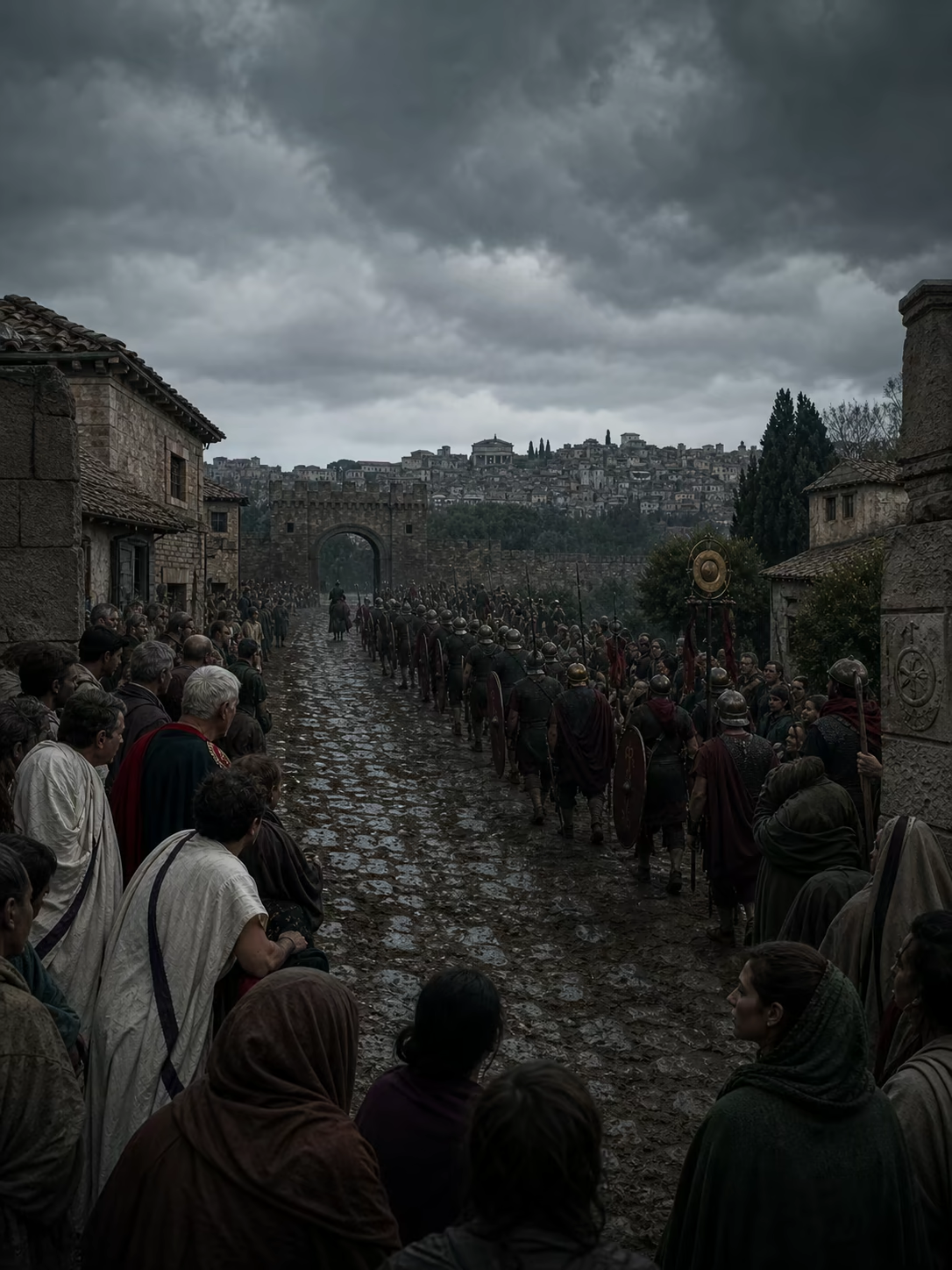
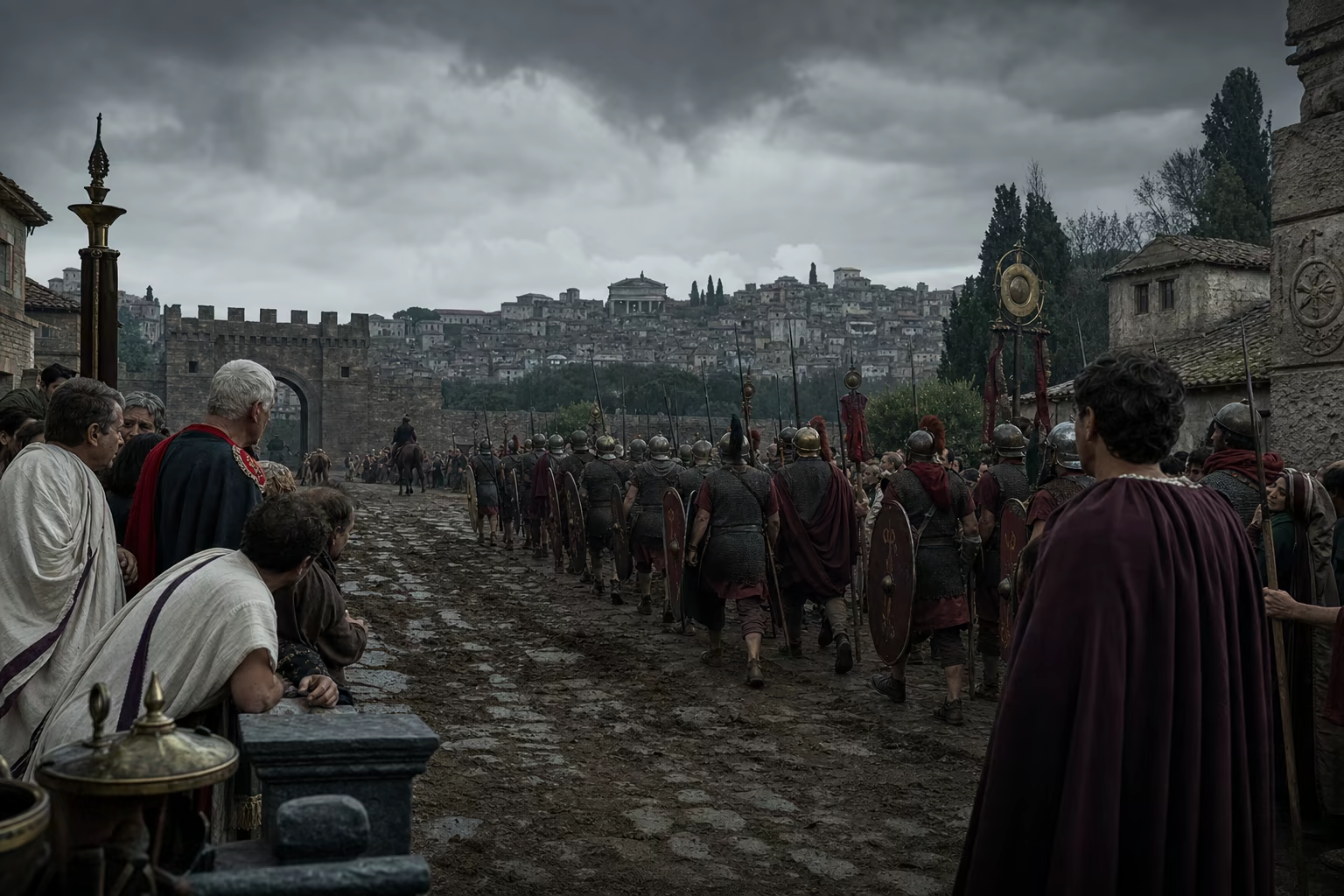
A Roman legion marches across the sacred boundary toward its own city while civil standards and anxious civilians replace any scene of foreign conquest.Place, date and surviving record

88–27 BCRome · the eastern provinces · Gaul · Actium

Armies Follow Their Generals Home

When long wars tied soldiers’ futures to individual commanders, Rome’s public power became capable of conquering Rome itself.

In 88 BC, the consul Lucius Cornelius Sulla turns troops assigned to an eastern war toward Rome after a political rival transfers his command. A Roman army crosses the city’s sacred boundary under its own magistrate. Sulla later returns from the east, wins a civil war, publishes lists of enemies who may be killed and has himself appointed dictator to rewrite the state. The Republic’s emergency power now follows victory rather than containing it.

The underlying commands keep growing. Pompey receives exceptional authority across the Mediterranean and eastern provinces, then seeks land and ratification for his veterans and settlements. Julius Caesar’s years in Gaul produce conquest, plunder, patronage and an army accustomed to his leadership. When the Senate’s political coalition demands that he surrender command, Caesar crosses the Rubicon in 49 BC and presents civil war as the defence of his dignitas and tribunician rights.

Caesar wins and accumulates offices, honours and a dictatorship without normal end. His assassins kill him in 44 BC while claiming to restore liberty. The murder removes the ruler, not the armies, colonies, debts and rival claims created by civil war. Octavian, Mark Antony and Lepidus obtain a legally constituted triumvirate, proscribe enemies and defeat the assassins. Another war then divides the Roman world between Antony in the east and Octavian in the west.

Octavian’s victory at Actium in 31 BC leaves one commander in possession of the decisive armies and provinces. In 27 BC he stages a transfer of powers and receives the name Augustus; later settlements give his position a durable combination of proconsular command and tribunician authority. Magistrates, Senate and assemblies continue. Their competition now takes place under a ruler who controls the largest military resources and can transmit a political household to successors.

What survived
  • Appian, Caesar, Cicero’s correspondence, inscriptions and coinage preserve partisan accounts and public acts across the civil wars.
  • The legal grants to Sulla, the triumvirs and Augustus show extraordinary command being authorised through Roman institutions as those institutions lost independent control of force.

Catherine Steel (2013)Harriet I. Flower (2010)Appian (second century AD)Julius Caesar (first century BC)Augustus (AD 14)

Follow the command back to Rome

Four states trace how an assigned war became a personal army, how repeated civil war normalised exceptional power and where command settled under Augustus.

CommanderSulla, serving consul

CommandThe war against Mithridates is transferred by political action at Rome

What movesAn army decides which Roman decision it will obey

Sulla persuades legions assigned to him to reverse direction and seize the city that had issued their command.

Act IV · One Roman name · 27 BC–AD 212

The Provinces Enter the Name

Emperors govern through armies, censuses and self-governing cities while service and grants carry citizenship across the provinces.

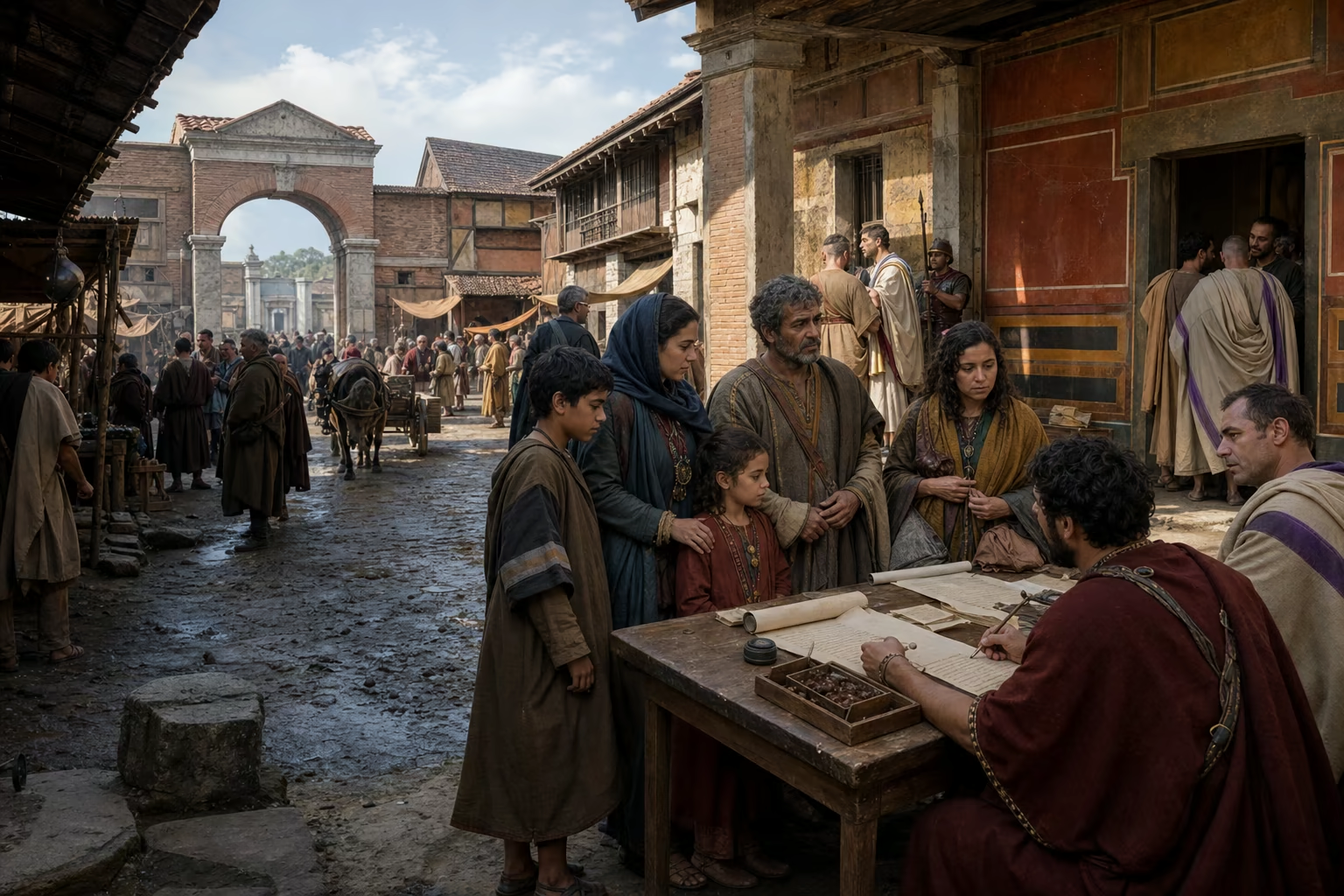
A multilingual provincial city gate opens onto a census table, local council chamber, market and distant Roman military road under worn painted masonry.Place, date and surviving record

27 BC–second century ADTarraco · Lugdunum · Corinth · Ephesus

The Emperor Governs Through Cities

The Principate held distant provinces through a small imperial superstructure resting on armies, censuses and local civic government.

A provincial household declares people, land and property before officials preparing a census. Augustus divides provincial commands between areas formally assigned to the Senate and those where he appoints legates, retaining control of the principal military zones. A permanent army receives regular terms of service and discharge. Taxes, customs dues, estates, mines and requisitions support soldiers, administration, the court and the immense food needs of Rome.

The imperial state remains thin by modern standards. A governor travels with staff, hears cases, supervises finance and answers disorder, but cannot administer every street from the provincial capital. Cities perform much of the daily work. Councils of local property holders manage funds, buildings, cults, markets and honours; magistrates regulate civic business; communities send embassies and petitions upward when local solutions fail.

Roman rule therefore preserves and reshapes existing civic landscapes. Greek poleis continue assemblies, councils and laws under imperial sovereignty. Western communities receive colonial or municipal forms adapted to local histories. The Lex Irnitana from Flavian Spain records procedures for magistrates, councils, elections, finances and jurisdiction in a Latin-status municipality. Such charters reveal neither identical cities nor unrestricted autonomy, but a repeatable grammar connecting local office to Roman authority.

Governors, soldiers, tax collectors and local magnates could abuse that structure. Provincial people paid for conquest, endured requisitions and faced unequal access to Roman patrons and courts. Emperors advertised hearings and punishment of bad officials because exploitation was a recurring danger. The empire became durable through this tension: Rome required local notables to govern, while those notables used Roman office, law and imperial favour to strengthen their position at home.

What survived
  • Census records, municipal laws, council decrees, petitions and governors’ correspondence reveal provincial administration working through local civic institutions.
  • Legal complaints and imperial responses document both administrative ideals and recurrent extraction, military interference and difficulty obtaining redress.

Augustus (AD 14)Clifford Ando (2000)Brian Campbell, ed. and trans. (2025)Ari Z. Bryen (2026)Municipality of Irni (AD 91)

Send an order through a province

Three stops show how imperial command passed through a governor and a local council before it reached ordinary provincial households.

MechanismCommands, appointments and judgments leave the imperial centre

ConsequenceOne ruler coordinates distant armies without administering every town

The emperor controlled the principal military provinces, appointed legates and answered selected petitions from communities and officials.

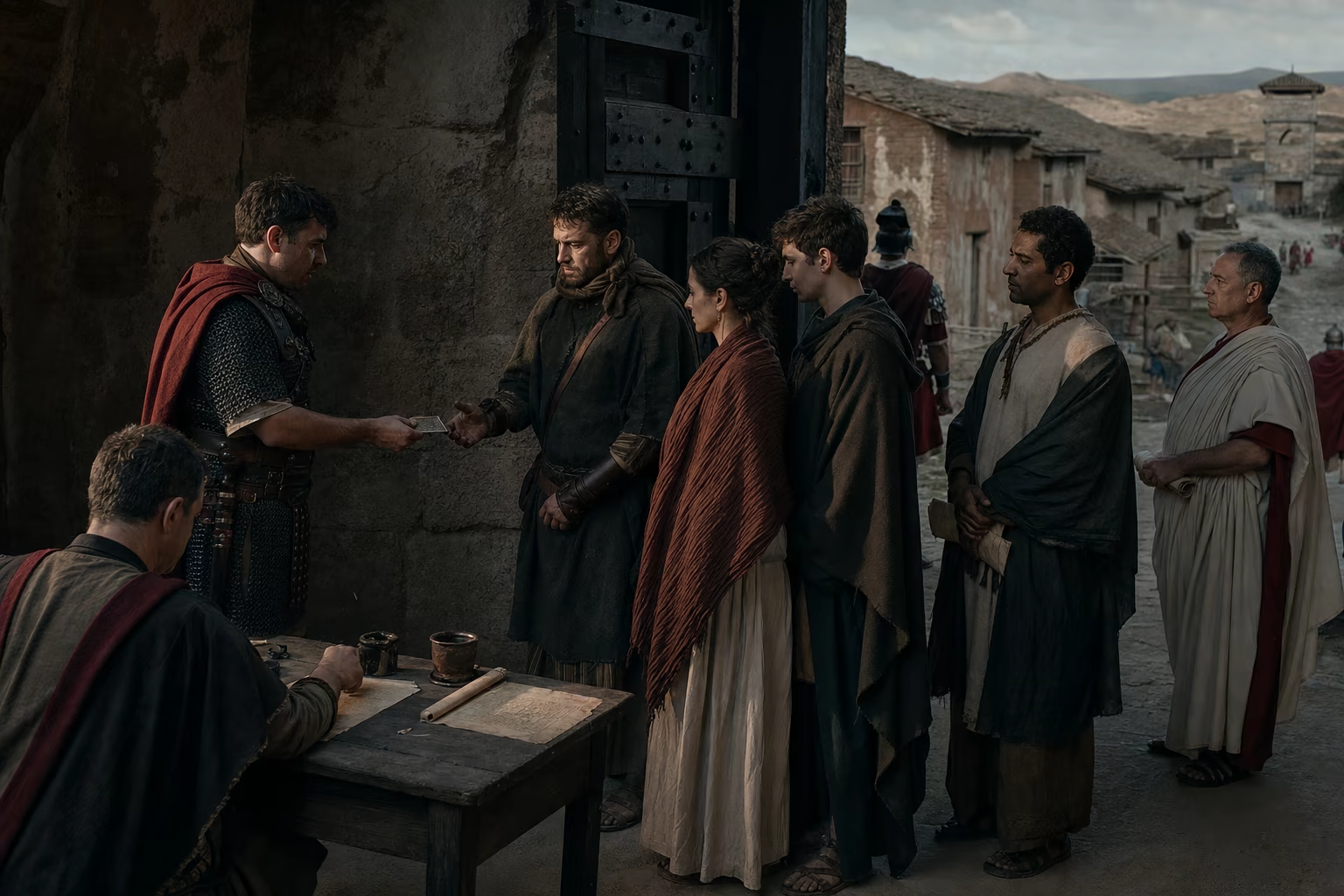
A provincial auxiliary veteran receives a bronze citizenship diploma beside his family while a freedperson and municipal magistrate wait at the same civic gate.Place, date and surviving record

first century BC–second century ADThe Rhine · Hispania · Gaul · cities across the empire

Service Opens the Gate

Citizenship spread through military service, manumission, local office and imperial grants long before it became nearly universal.

A bronze diploma is folded, sealed and handed to an auxiliary veteran after twenty-five years of service. He entered the army as a free provincial without Roman citizenship. The document records an imperial grant that can alter marriage, inheritance and the legal position of his household, although the treatment of children and unions changed over time. Thousands of such diplomas make citizenship visible as a reward administered across distant frontiers.

The army was one route among several. Enslaved people freed by Roman citizens could acquire forms of Roman citizenship, subject to legal restrictions, patronal obligations and the permanent mark of former enslavement. Their freeborn children entered a different standing. In towns with Latin rights, holding a municipal magistracy could bring Roman citizenship to an officeholder and family under the applicable grant. Emperors could reward individuals, units, communities or provincial elites.

Citizenship did not require a person to abandon every other belonging. A citizen of a Gallic or Spanish city could maintain local cult, kinship, language and office while acting in Roman law. Claudius argued in AD 48 for admitting leading men from Gallia Comata to the Senate, presenting Rome’s history as repeated incorporation. Tacitus preserves a literary version of the speech; the bronze Lyon Tablet preserves substantial wording from the imperial address itself.

The opening remained unequal. Senatorial office demanded immense wealth and imperial approval. Municipal government concentrated burdens and honours among property holders. Citizen women possessed important rights in property, inheritance and family status but did not vote or hold ordinary political magistracies. Enslaved people remained property. Citizenship expanded the number of people who could claim recognised standing from Roman institutions; it did not dissolve the hierarchies those institutions enforced.

What survived
  • Thousands of military diplomas record dated grants of citizenship and marriage rights to auxiliary veterans, with changes in formula across the imperial period.
  • Municipal laws, manumission rules, honorific inscriptions and the Lyon Tablet document several distinct routes into Roman civic standing.

British Museum (2024)Brian Campbell, ed. and trans. (2025)Werner Eck (2021)Tacitus (early second century AD)Altay Coşkun (2021)

Trace a path into the Roman name

Four paths show how an auxiliary veteran, a freedperson, a municipal officeholder and a provincial notable could acquire citizenship, together with the limits that remained.

Begins asA peregrine recruited into an auxiliary unit

PassageLong military service · honourable discharge · bronze diploma

Roman standingRoman citizenship and stated family or marriage provisions

Service was dangerous, discipline severe and diploma formulas changed over time

A free non-citizen could serve for roughly twenty-five years and receive an individually recorded imperial grant at honourable discharge.

A courier carries Caracalla’s citizenship decree through a crowded multilingual provincial city where soldiers, merchants, families and officials gather under a worn arch.Place, date and surviving record

AD 117–212Britannia · the Danube · North Africa · Egypt · Syria

The Roman Name Crosses the Empire

By the third century, provincial citizens, cities and armies had carried Rome far beyond Italy before one decree made citizenship the normal status of the free population.

A traveller can move from a British fort through Gallic towns, Alpine roads, Danubian camps, Greek cities and Syrian markets without entering a culturally uniform world. Latin dominates official life across much of the west; Greek carries administration and education across much of the east. Local languages, names, cults, food and law continue. What connects the route is a hierarchy of recognised cities, governors, military commands, taxes and appeals under the emperor.

The ruling class itself changes origin. Men from Spain, Gaul, North Africa and the eastern provinces enter the Senate; Trajan and Hadrian come from a senatorial family established in Italica, while later dynasties draw power from African and Syrian networks. Provincial birth does not make an emperor representative of ordinary provincial people. It shows that access to the centre no longer requires ancestral roots in the old Roman nobility.

In AD 212, Caracalla issues the measure known as the Constitutio Antoniniana. A damaged Greek papyrus from Egypt preserves part of its wording. The decree granted Roman citizenship to almost all free inhabitants of the empire. The exact treatment of dediticii in the fragment remains disputed. Ancient testimony associates the measure with taxes; scholars also examine military, legal, religious and political purposes. No single motive is securely proved by the surviving text.

The grant transforms citizenship by making it common. It expands the reach of Roman private law and brings new citizens within taxes attached to citizen transactions, while local law and identity continue in practice. The line between citizen and non-citizen loses much of its old organising force; divisions between free and enslaved, wealthy and poor, officeholder and subject remain severe. Rome has scaled the civic name of one city across an empire, creating the legal population that the Christian emperors will inherit.

What survived
  • P.Giss. 40 preserves a fragmentary Greek version of Caracalla’s edict; restoration of its exception clause and the emperor’s motives remain disputed.
  • Names, military diplomas, municipal careers, senatorial origins and legal documents show citizenship spreading widely before AD 212 and local identities continuing afterward.

Imperial chancery under Caracalla (AD 212)Brian Campbell, ed. and trans. (2025)Altay Coşkun (2021)Werner Eck (2021)British Museum (2024)

Read the reach of AD 212

Three stops distinguish the many provincial citizens already inside Roman law, the free inhabitants admitted by Caracalla and the hierarchies the grant did not remove.

MechanismIndividual and collective routes extend status over generations

ConsequenceThe decree enters an empire where citizenship is widespread but incomplete

Military service, manumission, municipal office and imperial grants had already created large provincial populations of Roman citizens.

Laws · roads · military diplomas · census records · municipal charters · histories · papyri

What survived

  1. Fred K. DrogulaSpheres of Control: The Origins of Government in Early RomeOxford University Press, 2026
  2. Andrew LintottThe Constitution of the Roman RepublicOxford University Press, 1999
  3. PolybiusHistoriesPrimary ancient evidence, second century BC
  4. LivyHistory of RomePrimary ancient evidence shaped under Augustus, late first century BC–early first century AD
  5. Roman legal traditionFragments attributed to the Twelve TablesPrimary legal evidence preserved in later quotations, traditionally 451–450 BC
  6. Marian HelmA Troubled Beginning: Rome and its Reluctant Allies in the Fourth Century BCAntichthon 51, 2017
  7. Saskia T. RoselaarCicero and the Italians: Expansion of Empire, Creation of LawCicero's Law, 2016
  8. Guy BradleyThe Roman Way of War, 250 BC–AD 300The Cambridge History of Warfare, 2020
  9. Ray LaurenceThe Roads of Roman Italy: Mobility and Cultural ChangeRoutledge, 1999
  10. Harriet I. FlowerRoman RepublicsPrinceton University Press, 2010
  11. Henrik MouritsenItalian Unification: A Study in Ancient and Modern HistoriographyInstitute of Classical Studies, 1998
  12. AppianCivil WarsPrimary ancient evidence, second century AD
  13. Catherine SteelThe End of the Roman Republic, 146 to 44 BCEdinburgh University Press, 2013
  14. Julius CaesarCivil WarPartisan primary ancient evidence, first century BC
  15. AugustusRes Gestae Divi AugustiImperial first-person inscription, AD 14
  16. Clifford AndoImperial Ideology and Provincial Loyalty in the Roman EmpireUniversity of California Press, 2000
  17. Brian Campbell, ed. and trans.Public and Private Interests: The ProvincesThe State, the Law, and the People in the Roman Empire, 2025
  18. Brian Campbell, ed. and trans.Status and Responsibility: Freedom, Slavery, CitizenshipThe State, the Law, and the People in the Roman Empire, 2025
  19. Ari Z. BryenBecoming the Roman ProvincesThe Judgment of the Provinces, 2026
  20. Werner EckThe Imperial Senate: Center of a Multinational ImperiumRome: An Empire of Many Nations, 2021
  21. British MuseumLegion: Life in the Roman ArmyExhibition research and object guide, 2024
  22. TacitusAnnals, Book 11Primary ancient evidence for Claudius and the Gallic senators, early second century AD
  23. Municipality of IrniLex IrnitanaFlavian municipal law on bronze tablets, AD 91
  24. Imperial chancery under CaracallaP.Giss. 40, fragment of the Constitutio AntoninianaPrimary papyrological evidence, AD 212
  25. Altay CoşkunRome: An Empire of Many NationsCambridge University Press, 2021